
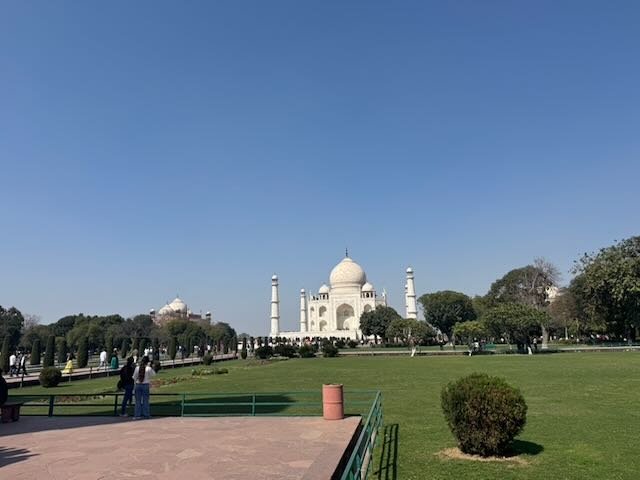
In February 2026 we set off for India, landing in Ahmedabad and working our way north through Rajasthan. Four cities, one day trip to Agra, and a lifetime of impressions. The food, the chaos, the impossible beauty of it all — India doesn't visit you; it happens to you.
Ahmedabad
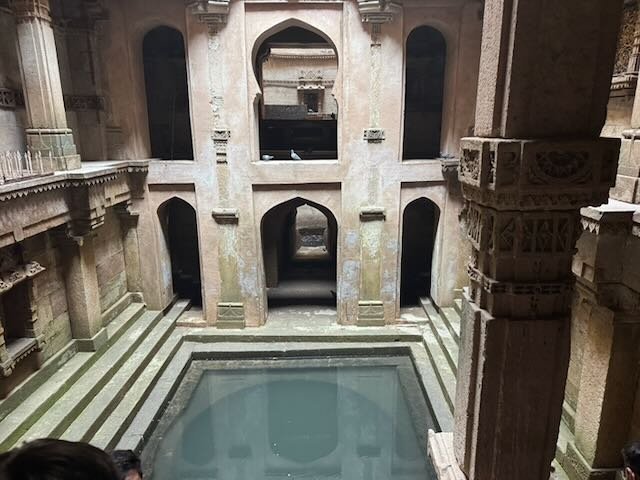
Our journey began in Ahmedabad, Gujarat's largest city and a place that feels like a living museum of Indo-Islamic architecture. We explored the old city, ate our weight in Gujarati thalis, and stood at the edge of the Adalaj Stepwell — a five-storey descent into cool, carved stone, built in 1498. Stepping down those ancient steps, with light filtering through the arches, you understand why these stepwells were as much about community as they were about water.
Udaipur
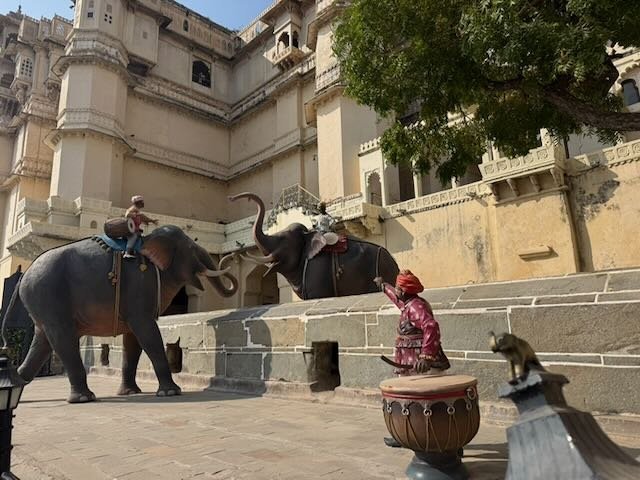
If Ahmedabad was the introduction, Udaipur was the love affair. The City of Lakes sits cradled in the Aravalli hills, its centrepiece the sprawling City Palace complex on the edge of Lake Pichola. The palace unfolds over four centuries of Mewar dynasty rule — room after room of mirrored mosaics, courtyard after courtyard of filigreed stone. The elephant statues guarding the terrace say everything about the ambition of this place.
Agra — The Taj Mahal
From Jaipur we took a day trip to Agra, and here's the thing about the Taj Mahal: you've seen it a thousand times in photographs, and none of them prepare you. It's bigger than you expect. Whiter. The marble seems to hold light rather than reflect it. Standing in the famous Mughal gardens that frame the approach, with the monument floating above its platform, you understand why this has been called a tear on the face of eternity.
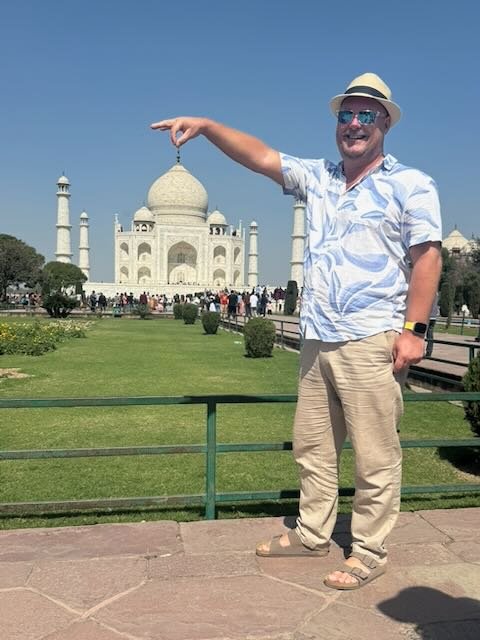
Touching the dome — the classic Taj Mahal forced-perspective shot. February 2026.
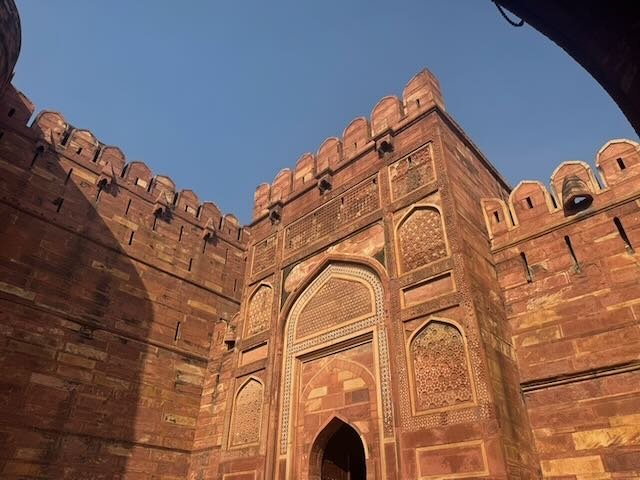
Just down the river sits Agra Fort — all red sandstone and white marble inlay, the Mughals' original power base. The intricate pietra dura work on the walls makes you realise the Taj wasn't an exception; it was what happened when they stopped holding back.
Jaipur
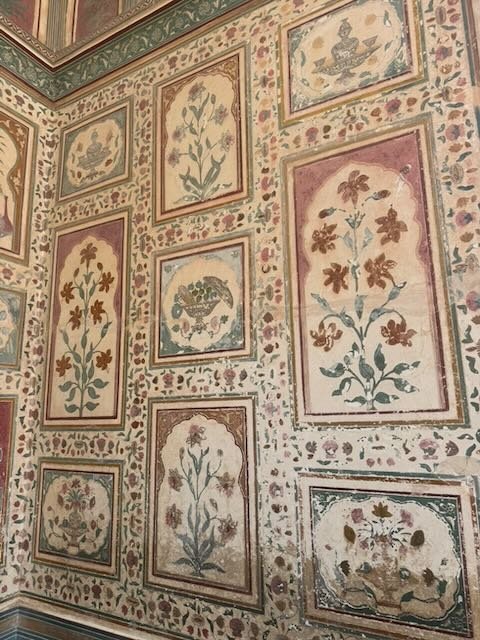
The Pink City closed out our journey. Jaipur is Rajasthan in full colour — the Hawa Mahal's honeycomb facade, the astronomical instruments of Jantar Mantar, and the Amber Fort perched on its hilltop above Maota Lake. The palace interiors here tell stories in pigment: centuries-old wall paintings of floral sprays, hunting scenes, and courtly life, faded but still vivid.
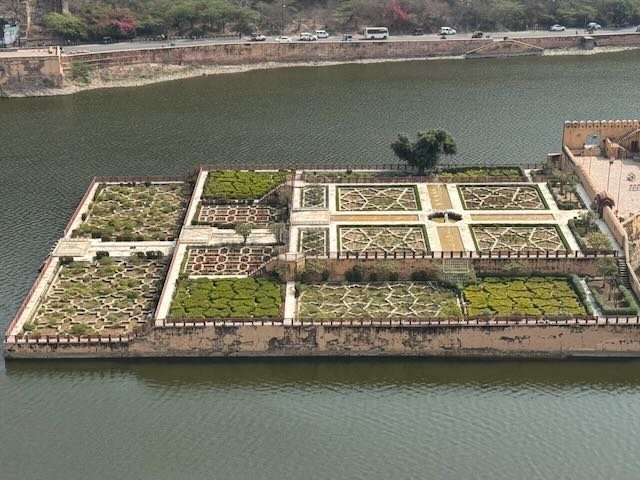
From the fort ramparts, you look down to the Kesar Kyari — a geometric saffron garden floating in the middle of the lake — and across to the hills beyond. It's the view that stays with you long after the spices have faded from your clothes.
Along the Way
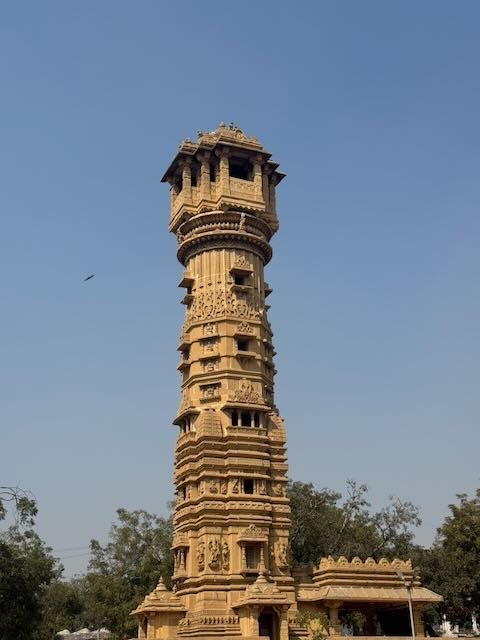
Between cities, Rajasthan opens up. The Vijay Stambh at Chittorgarh — a 37-metre victory tower from 1442, every inch of its nine storeys covered in carvings of Hindu deities and epic scenes — rises out of the fort like something from myth. These are the places you don't plan for that end up defining the trip.